
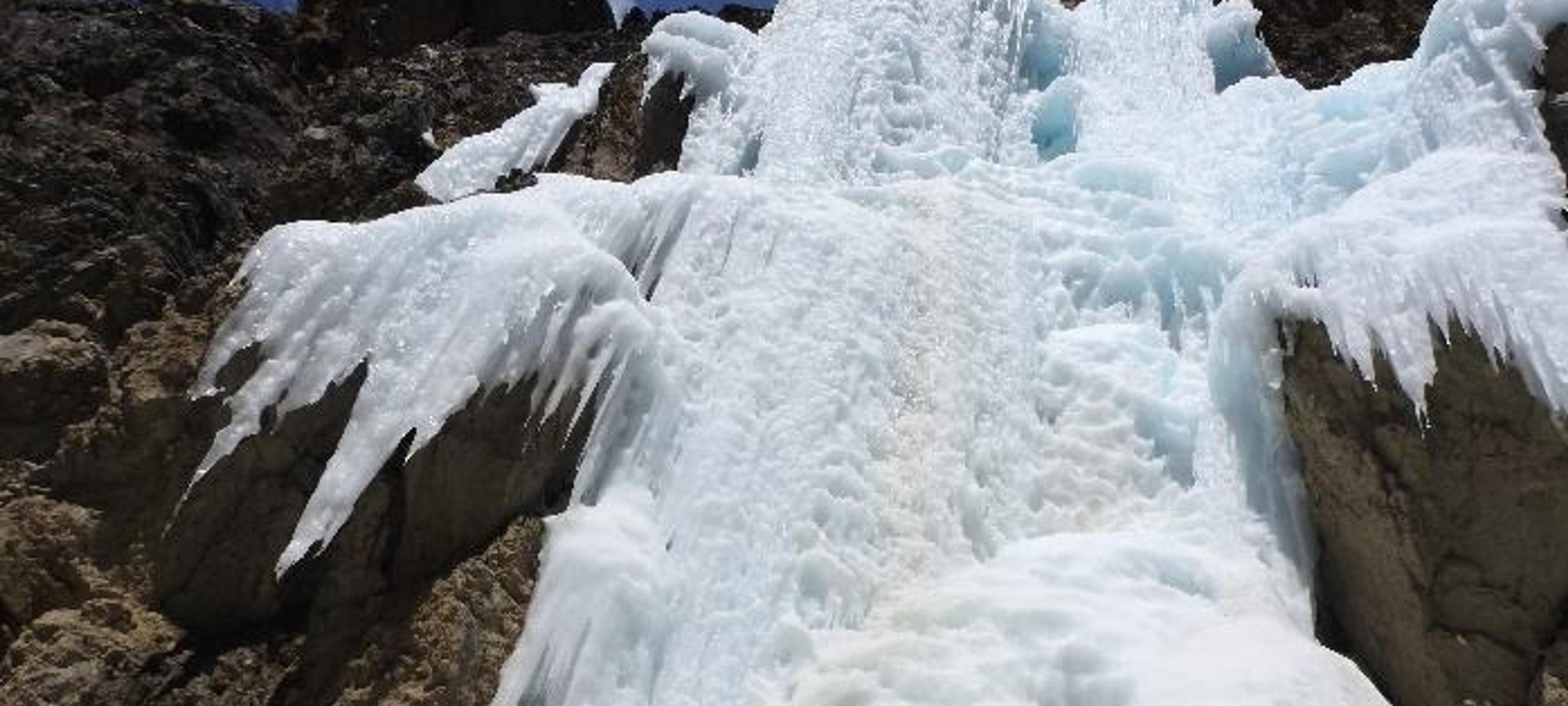
Bringing water closer to the fields, one frozen drop at a time. Artificial glaciers are helping Ladakh’s communities secure water, strengthen agriculture, and build climate resilience.
Introduction
The Water Conservation Project was implemented by LEHO to address severe seasonal water scarcity in remote agricultural communities across Ladakh. Agriculture in these high-altitude desert villages relies almost entirely on glacial meltwater for irrigation. However, due to climate change, natural glaciers are receding rapidly, and the timing of water release no longer aligns with the agricultural calendar. Local farmers require water during the critical sowing months of April and May, but natural glaciers do not begin melting in sufficient quantities until June. To overcome this seasonal gap, the project deployed innovative, community-based water conservation technologies—specifically artificial glaciers—across several villages, including Umla, Takmachik, Likir, and Ganglas.
Project Activities
The initiative combined the construction of artificial glaciers with local water storage infrastructure, canal repairs, and land conservation measures to secure water availability throughout the year.
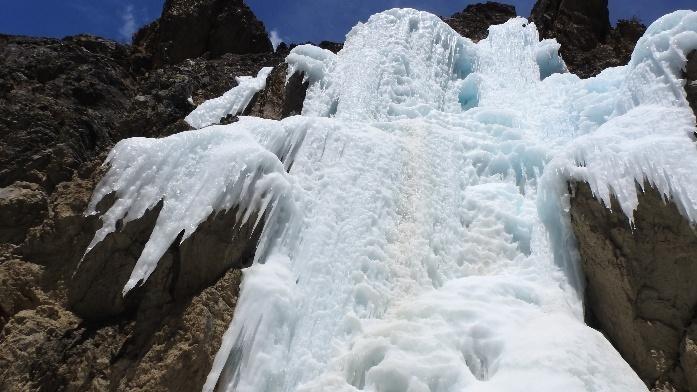
During the winter months (from November to February), streams and spring water were redirected to shaded, north-facing slopes located at lower altitudes near the villages. By constructing stone dams reinforced with wire mesh, workers reduced the flow of water, allowing it to freeze into massive ice reservoirs. Because these artificial glaciers were built closer to the fields than natural glaciers, they began melting earlier in the season—starting in March and April—providing timely irrigation for early sowing. To store and distribute this meltwater efficiently, brickwork storage tanks were built, and existing irrigation canals were repaired to prevent water loss. Additionally, extensive tree planting drives (such as 4,000 Sea Buckthorn plants in Umla) and soil mulching demonstrations were carried out to recharge groundwater and prevent soil erosion.
Results and Achievements
The implementation of the project led to significant ecological, economic, and social improvements for participating mountain communities.
The artificial glaciers provided a reliable water supply throughout April and May, effectively resolving the critical spring drought. Early water access enabled farmers to cultivate high-value cash crops, including vegetables like cabbage, cauliflower, peas, and nightshades, as well as commercial trees such as apples, apricots, and willows. For feed crops like alfalfa, farmers were able to achieve two harvests per season instead of one. Furthermore, slow-melting ice reservoirs recharged underground aquifers and sustained local springs. Securing a stable water supply also reduced internal village conflicts over irrigation rights and empowered local women financially through the sale of surplus produce.
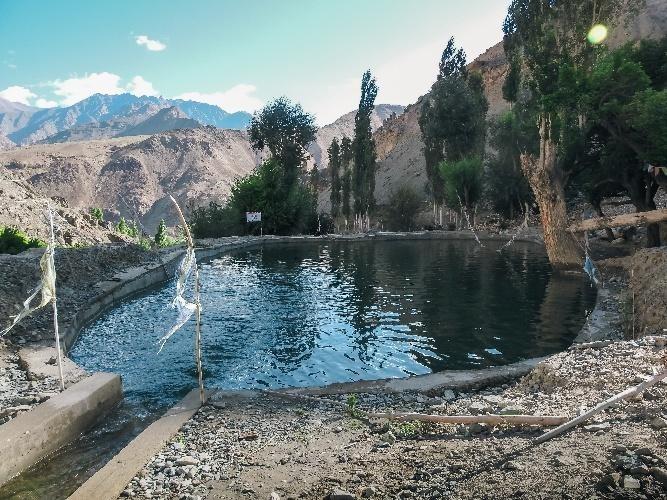
Example: Water Conservation Initiative in Umla Village
A key target area was Umla village, located at an altitude between 3,700 and 4,200 meters, supporting a population of roughly 114 to 120 residents.
The main interventions in Umla were carried out between 2013 and 2014. To resolve severe spring shortages, LEHO constructed two artificial glaciers, built two water reservoirs, and fully repaired two irrigation canals. Environmental stabilization was integrated directly into the site through the planting of 4,000 Sea Buckthorn saplings along slopes and canals, paired with field-level mulching demonstrations to maintain soil moisture.
The new infrastructure transformed Umla's farming operations: the rotation cycle required to irrigate all village fields was dramatically reduced from 12 days to just 3 days. This guaranteed access to water allowed households to introduce new commercial vegetable varieties and scale up fodder production, turning Umla into a model for successful mountain water management.
Conclusion
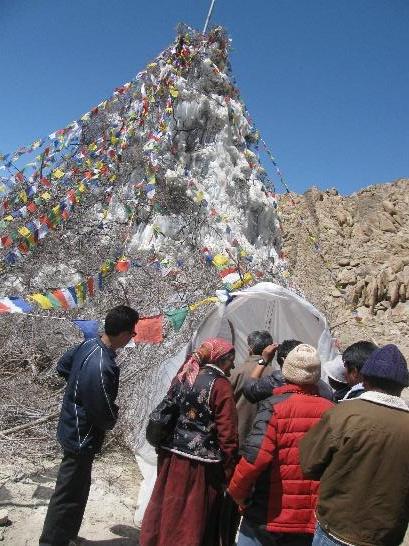
The Water Conservation Project demonstrated how low-cost, community-managed climate adaptation technologies can solve seasonal water shortage in Himalayan regions. By integrating artificial glaciers with storage tanks, canal restoration, and soil protection, the project successfully synchronized water availability with the farming season. Restoring water security enhanced agricultural productivity, improved rural livelihoods, and strengthened long-term climate resilience in high-altitude ecosystems.
Acknowledgement
LEHO gratefully acknowledges the support of Tata Trusts, NABARD (National Bank for Agriculture and Rural Development), LAHDC (Ladakh Autonomous Hill Development Council), MGNREGA, and local community members, whose financial, technical, and practical contributions made the implementation of the Water Conservation Project possible.
-