
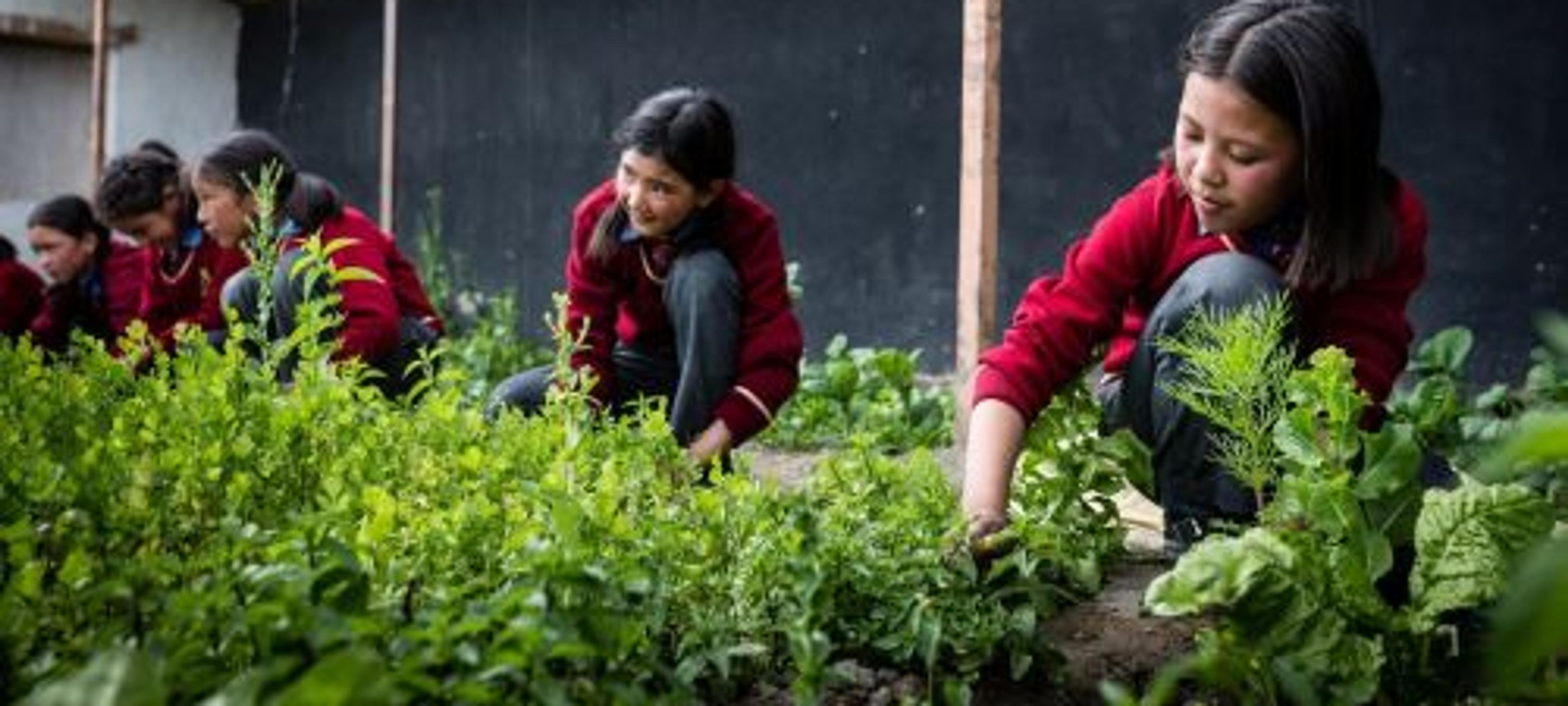
Enhancing year-round food security and nutrition for residential school hostels through solar greenhouse technology and underground storage cellars in Ladakh.
Introduction
The School Greenhouse Project was implemented in Ladakh to improve access to fresh vegetables and strengthen food security in remote school hostels. Because of the region's challenging winters and short growing season, many schools face challenges in providing fresh and nutritious food throughout the year.
Between 2017 and 2023, the project reached more than 1,500 children and staff members across 15 school hostels. Through greenhouse construction, food storage facilities, and training activities, schools were able to increase local food production and improve nutrition for students.
Project Activities
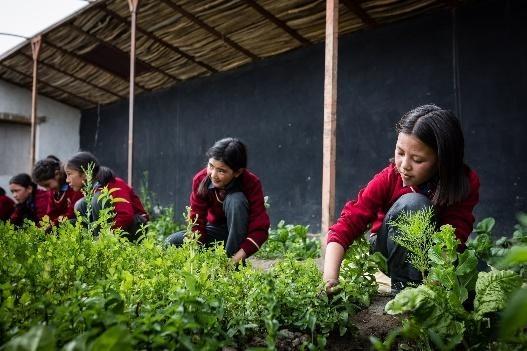
By 2019, five new greenhouses had been built and three existing greenhouses had been improved. Together, the nine greenhouses allowed schools to grow vegetables during much of the year, including the winter months. During the first project phase (2017-2019), the greenhouses produced a total of 4.6 tonnes of vegetables, including local spinach (Mongol), coriander, cabbage, turnips, and local lettuce varieties. This helped schools reduce spending on purchased vegetables and improve the variety of meals offered to students. The project also strengthened food storage and preparation facilities. Eight vegetable storage cellars were constructed and eight school kitchens were equipped. In addition, fruit plantations were established in four schools. Training was an important part of the project. Between 2017 and 2019, 288 students and staff members were trained in greenhouse cultivation and maintenance. Another 217 school staff members received training in nutrition, hygiene, sanitation, and food storage management.
Results and Achievements (2019)
The project provided additional fresh vegetables during winter for 1,179 children living in participating hostels. As a result, schools were able to serve more nutritious and diverse meals throughout the year. The project also increased knowledge and skills among students and school staff. Through practical training and daily greenhouse activities, participants learned about sustainable food production, greenhouse management, nutrition, and food safety. In addition, 737 children took part in activities promoting healthy and balanced diets, helping to increase awareness of nutrition and healthy eating habits.
Example Lingshed Area Development Foundation Hostel, Choglamsar
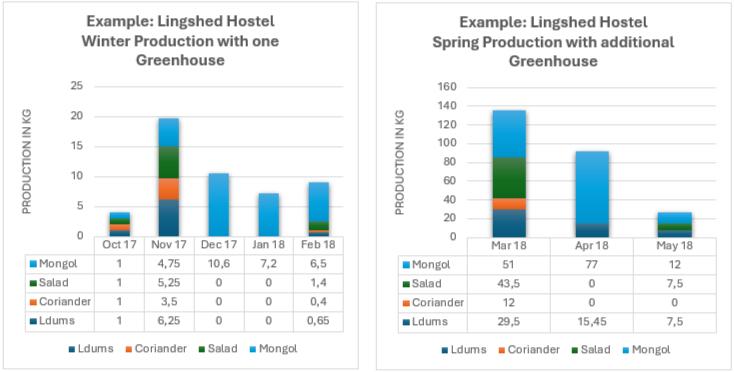
Lingshed Hostel is a good example of the project's impact. The hostel operates a large greenhouse measuring 93 x 20 feet and an additional trench greenhouse measuring 93 x 12 feet, allowing vegetable production over an extended period. From October to February, the main greenhouse is used for cultivation, while from March to May both greenhouses are in operation. This results in an average production of around 40 kilograms of vegetables per month. During the monitoring period, the hostel produced 167 kg of Mongol (local spinach), 78 kg of salad greens, 60 kg of ldums (local lettuce), and 34 kg of coriander. Production reached a peak of around 136 kg in March when both greenhouses were used. Surplus vegetables could be stored in the vegetable cellar and used later when production was lower. The experience of Lingshed Hostel demonstrates how greenhouse technology can improve nutrition, reduce food costs, and provide practical learning opportunities for students in remote areas.
Conclusion
The School Greenhouse Project has helped improve nutrition and food security in school hostels across Ladakh. Through the construction of greenhouses, storage facilities, and training activities, schools have strengthened their ability to produce and manage food locally.
With nine greenhouse facilities, 4.6 tonnes of vegetable production, the project demonstrates how simple and climate-adapted solutions can create lasting benefits for children and school communities in remote Himalayan regions.
Partners
LEHO gratefully acknowledges the support of the GoodPlanet Foundation, Stop Hunger, HOKA, Sodexo, and other partners whose contributions made the School Greenhouse Project possible. Their support helped improve nutrition, strengthen food security, and create valuable learning opportunities for children across Ladakh.
