The project improves living conditions in the extreme Himalayan valleys through passive solar greenhouses, securing nutrition and boosting local economies.
Passive Solar Greenhouses for the Cold Desert of the Western Himalaya (2004-2009)
Background
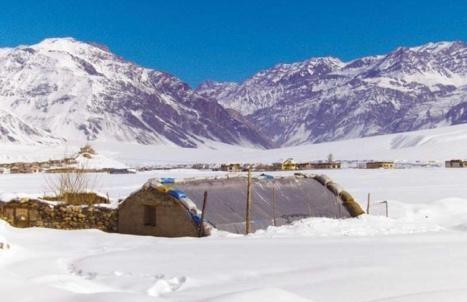
More than 250,000 people live in the high valleys of Ladakh, Kargil, and Lahaul & Spiti, at 2,700 to 4,500 meters above sea level, one of the most extreme inhabited regions on Earth. In winter, temperatures drop below –30°C, and mountain roads stay closed for up to six months. Because of this, fresh vegetables are scarce for most of the year, and imported food is extremely expensive. In remote areas like Zanskar, no fresh vegetables are available in winter.
From 2004 to 2009, GERES (Groupe Energies Renouvelables, Environnement et Solidarités), together with German partner BORDA and local partner NGOs LEDeG, LNP, SKARCHEN, and STAG, ran a major income-generation program funded by the European Union, which covered roughly 69% of the €1.76 million total budget. The program's centerpiece was the Improved Solar Greenhouse (IGH), a simple, low-cost design that lets families grow vegetables even in the coldest months. The program also covered five other income-generating activities: wool transformation, poultry farming, solar lambing sheds, food processing, and rural electrification via micro-hydro power.
IHG
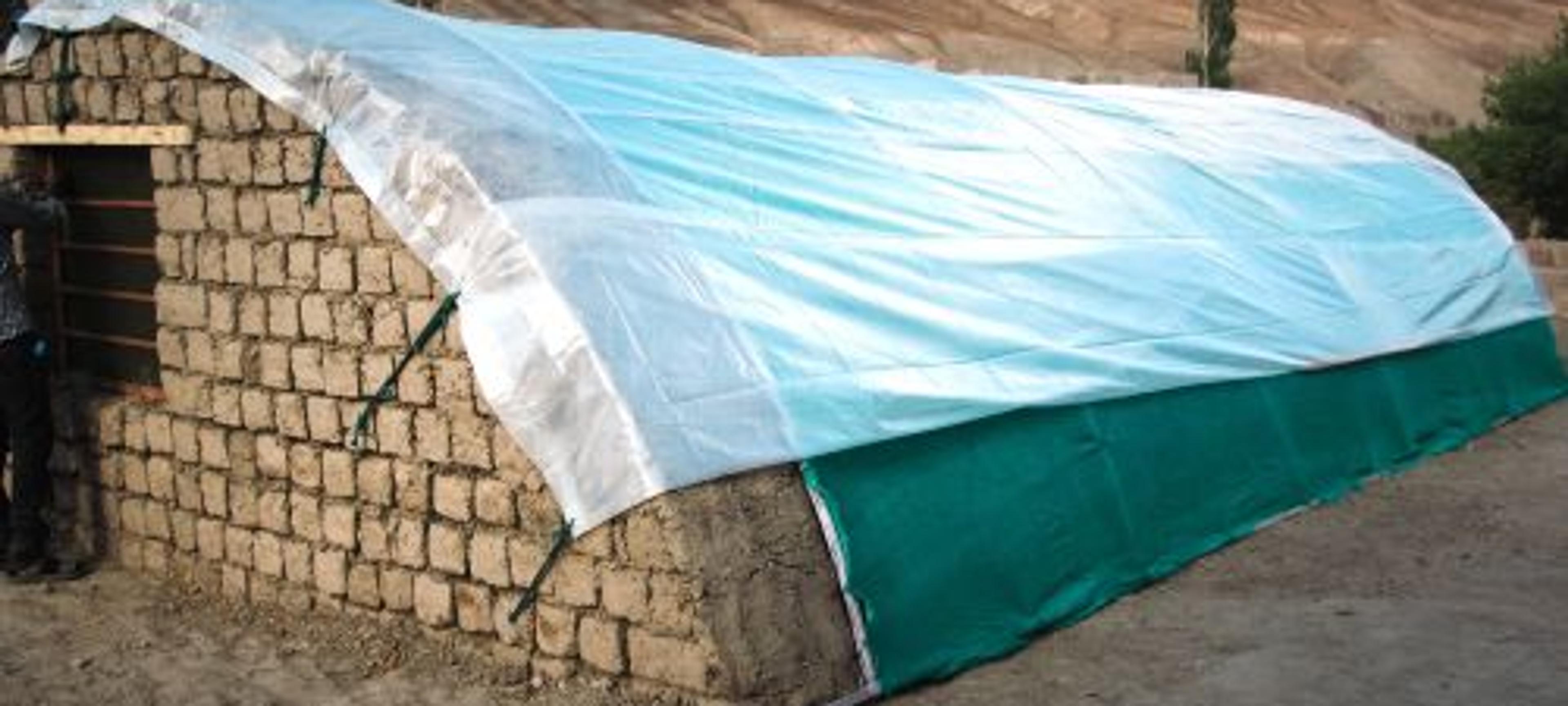
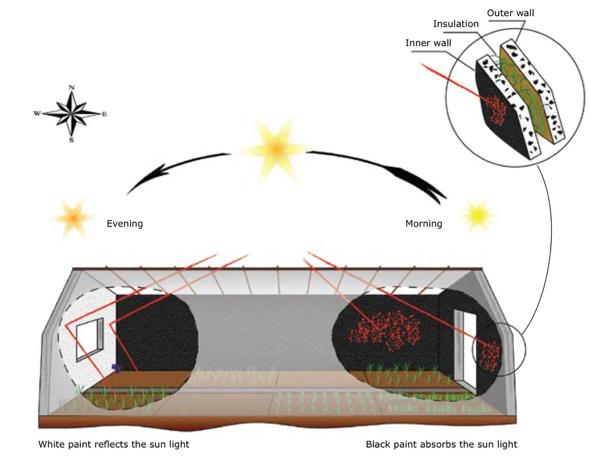
The IGH is a low-cost greenhouse that uses passive solar energy to protect vegetables from very cold temperatures. It is built with cheap, locally available materials such as mud bricks, stones, sand, and wooden beams. The greenhouse has double walls that store heat during the day and release it at night. A UV-resistant polythene sheet allows sunlight to enter and helps retain heat. Natural ventilation through roof windows, a door, and a side window controls temperature and humidity. The IGH is simple to construct and maintain. Only basic masonry skills and about two days of training are required for construction.
Objectives
The project had four specific objectives: setting up additional income-generation activities, empowering rural women, building the capacity of six local NGOs, and improving health through year-round access to fresh vegetables. The overall goal was to improve rural livelihoods and support the region's transition from subsistence farming toward a market-based economy.
LEHO's Role
Within the consortium, LEHO acted as the resource NGO for two components: the solar greenhouse and poultry farming. In this role, LEHO developed and refined the greenhouse design, trained local farmers, monitored construction quality across sites, and taught the agricultural skills families needed to run their greenhouses successfully. LEHO also trained proximity NGOs to implement the greenhouse project in their own areas, and its outreach helped secure engagement and funding from local government agriculture departments.
Across the whole project, 260 masons and carpenters were trained against a target of 50, and a network of 411 local resource persons was built, including construction supervisors, agricultural trainers, and follow-up advisors, to support quality and long-term sustainability.
Outcomes
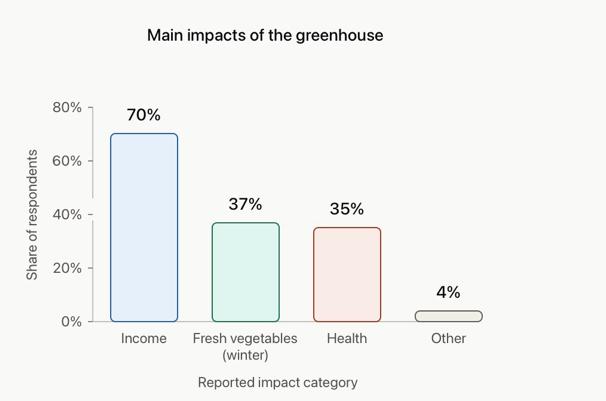
The project exceeded most of its original targets. Builders completed 536 greenhouses against a goal of 500, benefiting 623 families. Vegetable production reached about 770 tons per year, more than five times the target of 150 tons, and 456 women became the primary managers of their household greenhouse. Families with a greenhouse ate fresh vegetables five times more often in winter. About 55,000 people, roughly a quarter of the region's population, benefited indirectly from greenhouse vegetable production. Average household income from greenhouses rose by 41%, and 70% of greenhouse-owning families saw income grow by more than 30%. Extra income was spent mainly on household expenses and children's education.

In case studies, over 70% of women reported feeling significantly more confident, having gained control over farming decisions, sales, and spending. Across all six income-generating activities combined, the project directly benefited 1,718 households, 1,324 through income activities and 393 through rural electrification, roughly 11,000 people, about 6% of the region's total population.
Reach Beyond Ladakh
The IGH design proved so effective that it was replicated in Nepal, China, Afghanistan, Tajikistan, and Kyrgyzstan, and inspired a south-to-north technology transfer to greenhouses in the European Alps. To share the accumulated knowledge, the group solargreenhouse.org was created. In 2009, the project was named an international winner of the Ashden Award for Sustainable Energy, presented in London.
Acknowledgements
We are proud of LEHO's role as the technical foundation of the greenhouse and poultry farming components. Thank you to consortium partners GERES and BORDA, to fellow local partners LEDeG, LNP, SKARCHEN, and STAG for their work across the region, and to the European Union for its support. Most of all, thank you to the more than 1,700 families whose trust and effort made this project possible.