
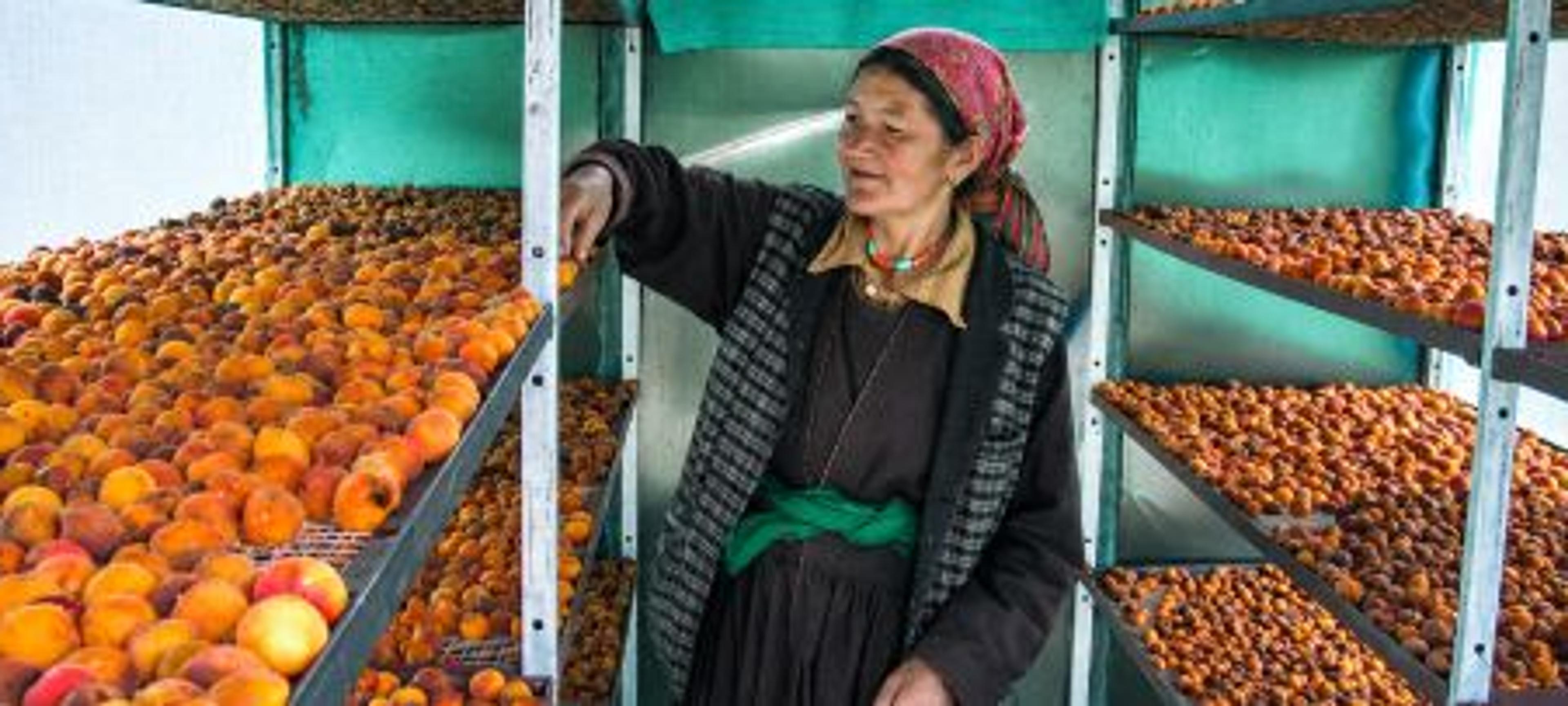
Empowering 4,000 rural families through solar greenhouses, artificial glaciers, and farmer cooperatives to ensure year-round food security and sustainable incomes in Ladakh.
Background
Ladakh is one of the highest inhabited regions in the world, situated in the rain shadow of the Trans-Himalayas, where annual rainfall is only about 100 millimeters and winter temperatures can drop below minus 30 degrees Celsius. Agriculture depends almost entirely on glacier meltwater, and with glaciers retreating due to climate change, water availability during the short six-month growing season has become increasingly unpredictable. Between 2013 and 2018, the Ladakh Environment and Health Organisation (LEHO) worked on the ground to address these challenges directly, in close partnership with the Sir Dorabji Tata Trust (SDTT).
Our Contribution on the Ground
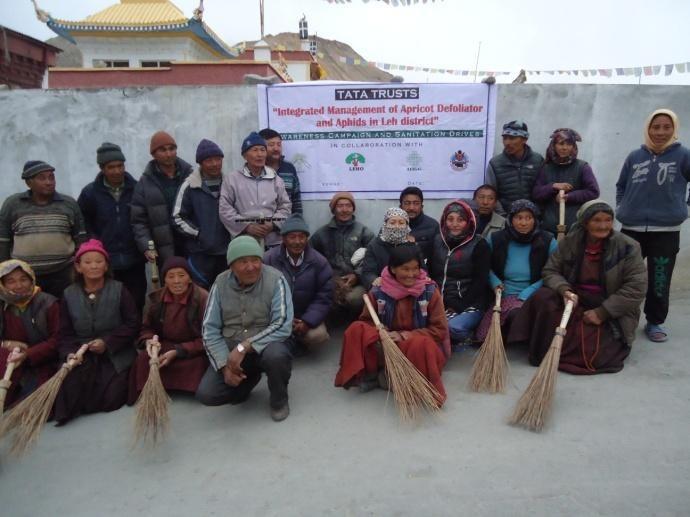
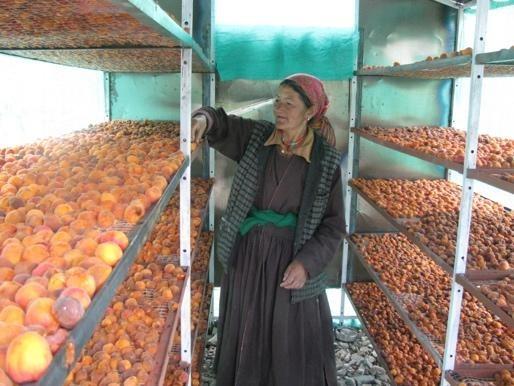
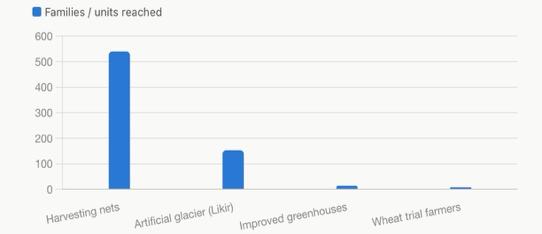
In apricot development, we distributed 48 solar dryers and 750 drying trays across Achinathang, Domkhar Dho, and Takmachik, and supplied 540 harvesting nets to six villages, directly benefiting 540 families. When a severe caterpillar outbreak threatened the region's apricot belt in 2016, LEHO helped coordinate a three-phase sanitation and pest-control campaign together with LAHDC, SKUAST, and the Forest and Horticulture Departments. In protected farming, we built on decades of experience: LEHO has worked on greenhouse technology since 1991 and, with the French NGO GERES, was the first organisation to develop the "Improved Greenhouse" design now used across the region. Between 2016 and 2017, ten new greenhouses were built and four revived. We also constructed artificial glaciers in Takmachik and Likir with technical guidance from glaciologist Chewang Norphel: the Takmachik structure mobilised 59 villagers for 531 person-days, while the Likir glacier engaged 165 families for 1,307 person-days, creating a reservoir capable of storing roughly 177 million gallons of water and irrigating land for 153 households. In crop improvement, we partnered with the Defence Institute of High Altitude Research (DIHAR) to introduce new watermelon varieties, scaling from 300 seedlings in 2016 to 2,270 in 2017, alongside bean, potato, and wheat trials across eight villages. We also trained women from local self-help groups in knitting with support from Umang (Ranikhet), and sent LEHO field staff to CAZRI in Jodhpur to study water-conservation techniques.
What We Have Achieved Together
These efforts translated into measurable change. Artificial glaciers in Likir and Takmachik together mobilised over 1,800 person-days of community labour and now extend the irrigation season by two to three weeks. Improved apricot handling raised both fruit quality and market prices, while new greenhouses improved household nutrition and generated seasonal income. New crop varieties opened fresh income streams, and trained women artisans gained marketable new skills.
Acknowledgements
The Leh Livelihood Initiative was made possible through the partnership and support of the Sir Dorabji Tata Trust (SDTT), alongside key technical and institutional collaborators: the Ladakh Autonomous Hill Development Council (LAHDC), the National Bank for Agriculture and Rural Development (NABARD), the Defence Institute of High Altitude Research (DIHAR), GERES (Groupe Énergies Renouvelables, Environnement et Solidarités, France), the Central Arid Zone Research Institute (CAZRI), Jodhpur, SKUAST, the Forest and Horticulture Departments of Ladakh, Umang, Ranikhet, and fellow network organisations LEDeG (Ladakh Ecological Development Group) and the Leh Nutrition Project (LNP). Above all, our deepest thanks go to the farmers, village committees, and communities of Ladakh, whose trust, labour, and active participation made every one of these achievements possible.